The laptops which will be issued to most MS teachers, in preparation for 1 to 1 next school year, will be ready in the first week after the Winter break. They are now in school but were not received as promptly as we had hoped. The laptops will be distributed during the second part of the Upper School meeting on Wednesday 7 January 2015. At the meeting, some initial advice and training will be given, as well as details about the PD programme which will help teachers to master their new tool.
Then we can look forward to a half-year of getting used to using the machines before 1 to 1 @ ISL begins in August 2015. Hopefully that will involve many colleagues trying out some new things in the classroom even before the MS is 1 to 1.
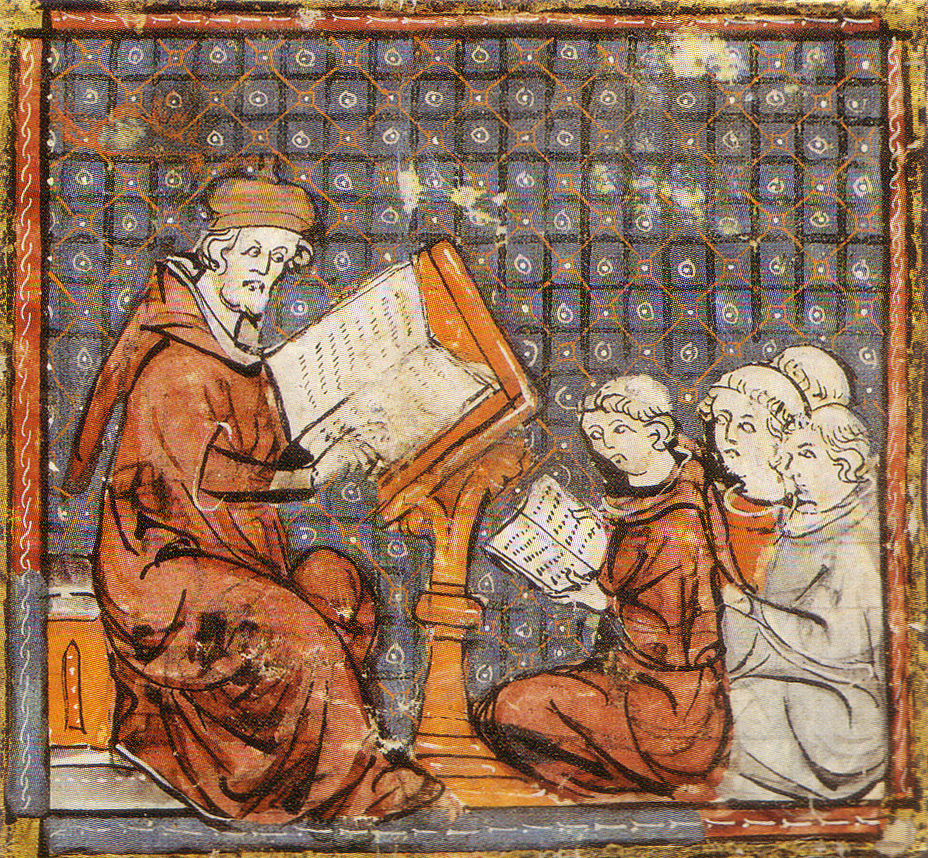
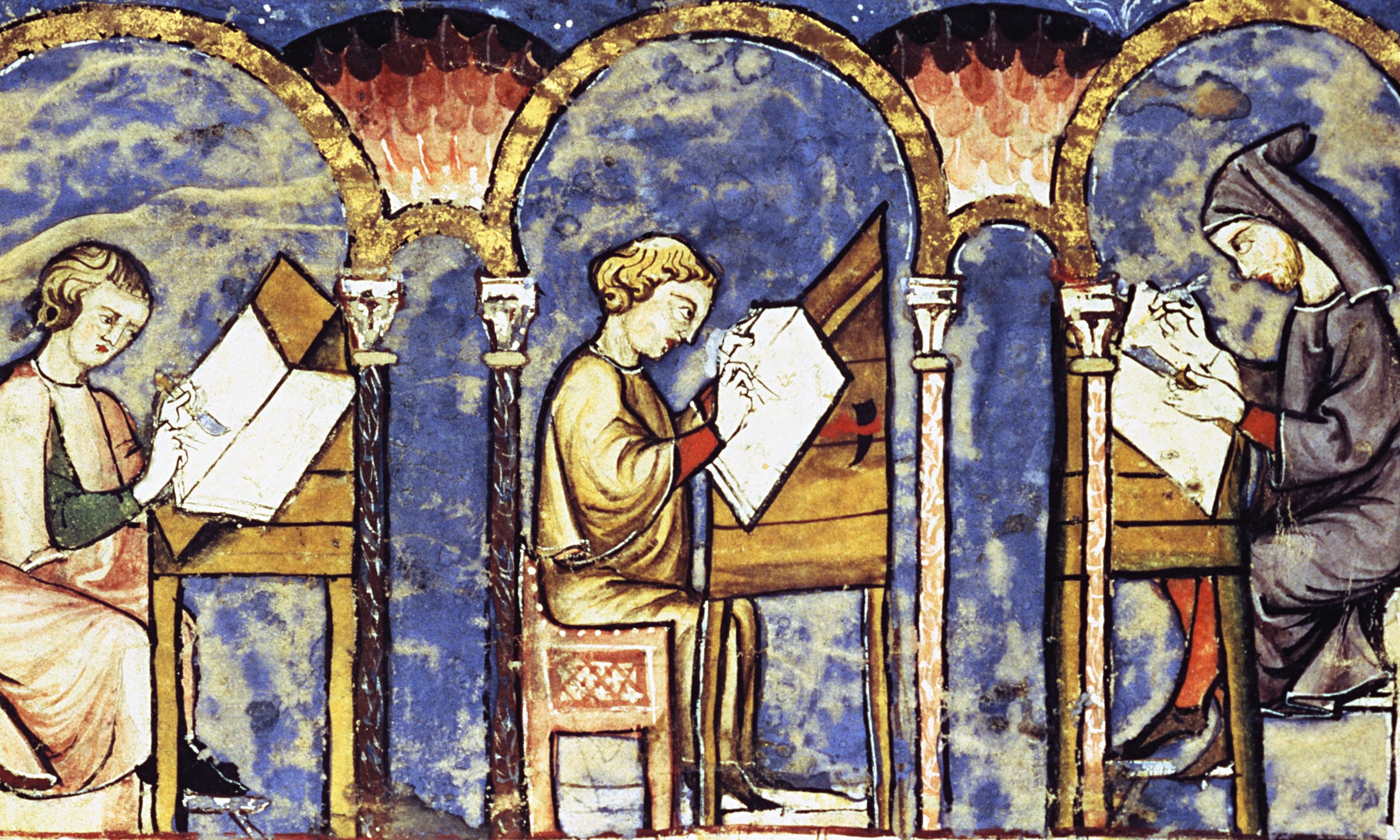
You may have seen this video before: Brother Ansgar is introduced to the new technology called a 'book'.
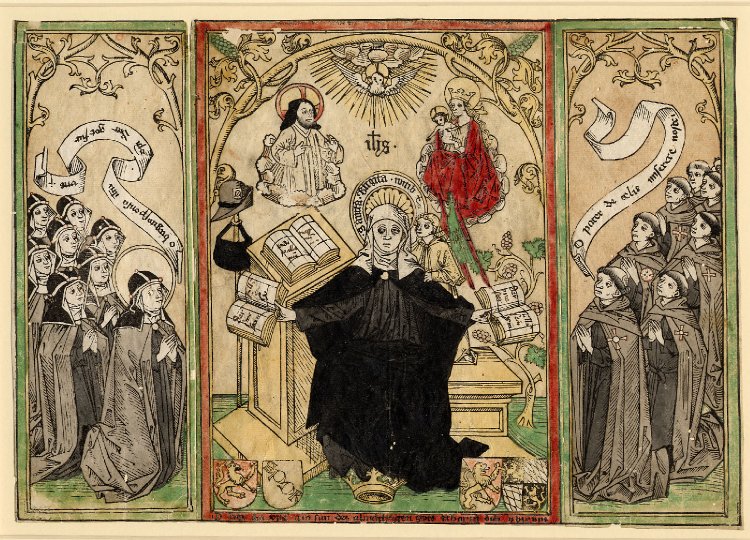
It's always worth another look, but what is not so well known is a later conversation between the two monks, also based on a real event in history. There is no video, but fortunately a scroll was found and has been translated from the original Norwegian.
Ansgar comes into Morten's cell. Morten is reading.
Ansgar: I've got much more used to these books now. But I hear that the trainee monks will all be bringing their own books next year.
Morten: Yes, that's the new 1 to 1 programme. We're hoping that it will inspire the novices and the monks to teach and learn in new ways.
Ansgar: Yeees... but I'm not sure it's such a good idea. Just because the Abbot of Clervaux is doing it, doesn't mean we have to follow suit.
Morten: We were 1 to 1 at my previous monastery. I wasn't sure about it in the beginning, but I soon found that it allowed me to do things I couldn't do before in the schoolroom.
Ansgar: Ah yes, but you've always been a lover of new technology. What about the rest of us? I already teach my novices very well. I don't see the point of bringing something new and distracting into the lessons. If they all have a book with them, how do I know they are listening to me?
Morten: You tell them to close it. You are in charge. And you're right, Ansgar, you are a very good teacher and your students appreciate that. But the book is a new development which affects all areas of life. Education too. It is not fair on your novices to ignore it.
Ansgar: But I don't know where to start! You're asking me to do a completely different job...
Morten: That's not the way to look at it, Ansgar. First of all, you are already an expert. You know how to teach your subject; your students do very well and you know a good teaching idea when you see one. You are always looking for ways to improve how you teach. All a 1 to 1 book environment does is to give you new ways to engage the novices in addition to the excellent things you are already doing.
Ansgar: But where do I start? I'm not used to a 1 to 1 schoolroom. Suddenly I have to do every lesson in this new way.
Morten: No you don't. Don't listen to those who say that a revolution has occurred. You will evolve into a 1 to 1 monk at your own pace. Why would you throw away everything that works so well? But I know you are honest with yourself and you will see ways that you can teach your novices better using books: new ways you have waited your whole career to see made possible.
Ansgar: So it's OK to have lessons with no books?
Morten: Of course. There are many occasions when the old methods such as scrolls, plainsong or meditation are the most suitable. But it would be a mistake not to take advantage of what 1 to 1 books allow you to do which you could never do before. This monastery admires risk-takers, so try something new, but do it with your least successful unit where the stakes are not too high - not everything will go right the first time. Also, work with your colleagues; share ideas and experiences. And talk to the Book Facilitator; he will come to your cell with some ideas or he can meet your novices in the cloister and model a lesson with 1 to 1 books.
Ansgar: I'm afraid of what the novices will say. They already know so much about books.
Morten: It's easy to think that, but don't assume because they have their noses buried in a book all day they know how to use it in an academic situation. The novices are in a rut with their technology. They still need you and your teaching expertise to help them use the books to understand your subject. The role of the good monk has always been to take the novices out of their comfort zone, to bring them to higher levels of thinking. The beauty of 1 to 1 books is that you have more possibilities than before to do just that. All of your novices now have access to knowledge when they need it and at the speed that they can learn. That leaves your hands free to help individuals, suggest another book or give them different tasks.
Ansgar: I don't even need to use the books all lesson, it could just be one activity...
Morten: Exactly.
Ansgar: But sometimes things will go wrong...
Morten: That's life, Ansgar. Saint Sirken has preached: "If you're not prepared to be wrong, you'll never come up with anything original".
Ansgar: But I'm so busy...
Morten: I'm not going to tell you that you won't have to do some work and spend some time learning new ways with 1 to 1 books, but there are many ways to be efficient and effective: working with your fellow monks, Ecclesiastical Development, getting ideas from colleagues at other monasteries. You are not afraid of a bit of hard labour, Brother Ansgar. The important thing is to be motivated and to see that you are not being asked to change completely; the monastery wants you to apply your expertise to the new tool and become an even better teacher for your novices. You may even enjoy the journey.
Ansgar: Well if you put it like that...
Morten: And now I must leave you: the Abbot was reading in the refectory and has spilt mead on his scroll.
Thank you for your participation in yesterday's PD meeting. I am happy that we have taken another collective step on the Long Road to 1 to 1. When the MS students begin to bring laptops to every class in August 2015, I hope we will feel ready to meet the challenge and to recognise that that day is not a Big Bang where afterwards nothing is ever the same again, but rather we are taking another step on a journey.
As I emphasised at the meeting: SAMR is for expert teachers, not expert technologists.
The feedback of SAMR examples from subject departments was very thoughtful and enlightening. Each subject group contributed some great ideas of how SAMR is already implemented in their classrooms and how they plan to widen it.
If you are looking for more ideas about how SAMR can be applied, here is the gallery of examples from around the world which also contains some great work by ISL teachers. I shall frequently be refining this as a reference and celebration of SAMR at ISL.
My desire to learn more about SAMR (70 total responses)
Your paper feedback was very interesting. As you can see from the bar chart, 80% of staff rated at 4 or above their desire to know more.
A small sample of your comments:
"Agree with S, A and possibly M, but is R necessarily a constructive idea??"
"I like the sound of it in principle because it's Bloom's taxonomy applied to technology."
"There appears to be a lot of fear around!"
"I want time to work on developing a lesson/ unit for a particular class not a large group meeting."
The comments will guide the development of the PD programme.
Here is a link to the full report including everyone's comments.
Once more, I am very grateful for your active contribution to 1 to 1 at ISL.
If you are feeling it is time to SAMR, please let me know; I am keen to help you.
Thank you to the many colleagues who came to the Library TGIF to meet and greet the new collection; to discuss the Mindset book; to share their apps, but mainly to socialise with their colleagues.
From the Appy Hour activity, here are five excellent app recommendations which are very useful in the classroom. Some of them require a tablet or smartphone, but others work on more devices. If you'd like to see more, the demonstrators would be happy to show you.
MYSCRIPT CALCULATOR
As a Physics teacher, I dreamed of being able instantly to get answers to my hand-written calculations. And since I discovered this free app, I can. Please talk to me if you would like to see a demonstration.
MOBILE MOUSE Tony Barnes showed us how he uses the Mobile Mouse on his iPad (could also be a smartphone) to move the mouse on his computer which was at the other side of the room. It frees the teacher to be anywhere in the room. It is also the couch potato's dream, since you can use it to control your TV from the comfort of your armchair if your TV programme is streaming from the computer. Here is the website.
This app is available for Mac, Windows, iOS and Android.
Zak Lawrence showed us this one. Newsela is a great website which publishes new news stories every day. The cool thing is that each story exists in different reading age versions. Grade 6 already uses Newsela, and there are also very many possibilities throughout the school and subjects.
Bruce Duxbury presented Evernote, of which he is probably the school's most powerful user. It is a very well used service which exists as a website, as well as apps on all platforms. Evernote is a place where you can store all of the things you come across online, as well as notes you write yourself, audio, video or photos. You can organise your notes, but the most powerful function is the search with which will find keywords across all the media (yes, it even reads the writing in photos of handwritten notes).
Have you ever wondered what your ancestor looked like 100 000 generations ago? Devolve me allows you to transform your selfie into that of your hominid ancestor. On the left is my Australopithecus forebear.
Tess Charnaud demonstrated the Open University's Devolve Me app and showed how students can learn about human evolution while having fun. The app contains information about the diet and habitat of different hominid species and allows the students to understand why species adapt the way they do. They don't even realise they are learning.
Most days, colleagues ask me about aspects of the 1 to 1 classrooms we will have next year. Sometimes I have answers which I think the whole upper school should hear at the same time, as well as having a single place to find answers to their questions. So here is an update of where we are with 1 to 1 at ISL.
PARENTS' MEETINGS
On November 5th 2014, Nancy and Jason spoke to many of the parents of Grades 6 and 7 about the 1 to 1 programme. Below you will see the slides and a link to the handout which describe the rationale, the implementation plan, some myths about 1 to 1 and the specification for the laptops the students may bring. We are holding the same meeting with Grade 5 parents on Wednesday 19 November.
The parents and students are understandably keen to know about the 1 to 1 programme, so Jason has created a website to answer those questions. Much of the material will be of interest to teachers too. Our plan is that this blog, Icy Tea News, will be the repository for information which is of more interest to staff.
The website is called Tech @ ISL (tech.islux.lu), and will grow into a comprehensive resource for community members.
We were keen to have these in teachers' hands by November, but there are many things to get right, including the basic software available to all staff, as well as optional programs only needed by some teachers. The laptops have been ordered and the company expects to deliver in early December. We will be offering PD in the use of the new machines.
As they think about the requirements of the new learning environment and the variety of online resources we are developing, many teachers mention to me that they wish there were a system whereby students could find all of their learning resources in one place. There will be!
We are planning the introduction of a LMS which will offer students and teachers personalised access to their classes; calendars with only their relevant events and deadlines; one portal to all of their learning materials and a means to manage assignments, deadlines and submissions. Our research into the most suitable platform is in its final stages.
Any work that colleagues have done on wikis or blogs and in Drive will not be wasted; they can be incorporated in the LMS. Office 365 will be the channel for official school documents, but it will not be compulsory for teaching materials which will continue to be in many suitable formats.
PD PROGRAMME
We all recognise that 1 to 1 entails a steep learning curve for the ISL community. Naturally, it is important that this be well-managed and takes account of the great diversity of needs among teachers, staff, students and parents. PD will consist of staff meetings; smaller groups; individual tutorials; and a system of self-study units. The first staff meeting will be on Wednesday 26 November.
USEFUL DOCUMENTS
Over the last year, documents have been developed which envisage 1 to 1 at ISL. Below are some links. These documents and others will be collected together on a page on this blog so that you can have one place to refer to them.
So, it's today. Many classes around the word are posting photos of their activities. I have taken some pictures of classes at ISL. Let me know if you want to be included (it doesn't have to be 11 am precisely). If you want to do it yourself, here are the ways:
Post on TES Conenct facebook page
email to teachingmoment@tes.co.uk
Tweet to @tes with hashtag #teachingmoment
Let me know, if you want help with any of these (maybe this is the week you get your head around Twitter).
This sounds like a great idea for next Wednesday 10 September which is a C day. Teachers and students around the world will share what they are doing at exactly 11 am (their time). This is what it looked like last year:
And as the day unfolds, you can follow it from timezone to timezone, and when 11 am arrives, you can add your class and then follow what others are posting, maybe even chat with them. You can use Twitter or email. Who knows where it will lead? My former students and colleagues in China were included in the official video above. If you are interested, but feel in need of some support to make it happen, please get in touch with me.
I have promoted the TED Radio Hour before as a marriage of TED Talks and the radio medium: Five or so curated TED talks linked with interviews with the talkers. For an hour.
One of the most recent TRHs was about Privacy, mostly related to the ability of technology to deprive us of it. For me, the most pressing points were: 1) that we have a right to privacy; 2) that privacy is not secrecy; 3) that absolute privacy has never been a feature of life in any society.
Now that we know that there has a been concerted effort to monitor our activities online for more than a decade, it is important that we learn the skills of being mindful of that fact. We should not shun social media, rather we should make decisions about what we wish to make public and what not.
You know the type of article: 3024 apps you can't work without, 10 commonplace ideas bloggers use to fill a post ... etc.
It can be very intimidating, and can give you the feeling that if you don't click through, you will never keep up with the pace of change.
But I have good news:
1) There is too much in the EdTech world for any one person to know and use.
If you ignore it today, the world will not end; there will be another 127 ideas tomorrow. And if it is a good idea, it will come around again.
2) It is just an opinion, it is not fact. Some of these articles, like any other ideas, are excellent, but others are not ("IT has changed schools forever!"). We must not abandon our critical faculties, and we should not be afraid to say: Interesting, but I respectfully disagree.
As I said, though, there are some great writers and thinkers around. One of them is AJ Juliani. He does not lose sight of the fact that what we are doing with technology in education is not about the machines, it's about the people. He has just published an excellent 'list' article (see link below). I took away many things, but also two which I have been planning to make my colleagues aware of (now he has done it for me, but you'll have to click through to see them).
I love the Veritasium videos by Derek Muller, a Canadian-Australian. He covers many topics in Science and other topics which are also of interest to the lay viewer. They are at a perfect level for students too. This video beautifully illustrates how science helps us to look for patterns. It would be excellent for use in ToK classes, or any subject in the sciences or humanities where we use the inductive method. Why not subscribe to this channel?
But first, can you solve the puzzle before he gives the answer?
At the TTT, I ran a session to introduce the idea of gaining experience and qualifications using Google Apps for Education. Below is the slideshow of that session. If you are interested, please come and talk to me. I shall be submitting a common application to the PD Committee to request payment for the exams for any teachers who would like to take part. If you want to be included, please let me know by Monday 3 March.
 The laptops which will be issued to most MS teachers, in preparation for 1 to 1 next school year, will be ready in the first week after the Winter break. They are now in school but were not received as promptly as we had hoped. The laptops will be distributed during the second part of the Upper School meeting on Wednesday 7 January 2015. At the meeting, some initial advice and training will be given, as well as details about the PD programme which will help teachers to master their new tool.